

AI in Technical Support: How the Role Is Changing
Artificial intelligence is changing technical support.
But the biggest change may not be that AI is taking technical support jobs away.
The bigger change is what companies will expect from the people they hire for these jobs.
For years, technical support professionals have spent a large part of their time searching documentation, checking logs, answering common questions, troubleshooting known problems and updating tickets.
AI can now help with many of these tasks.
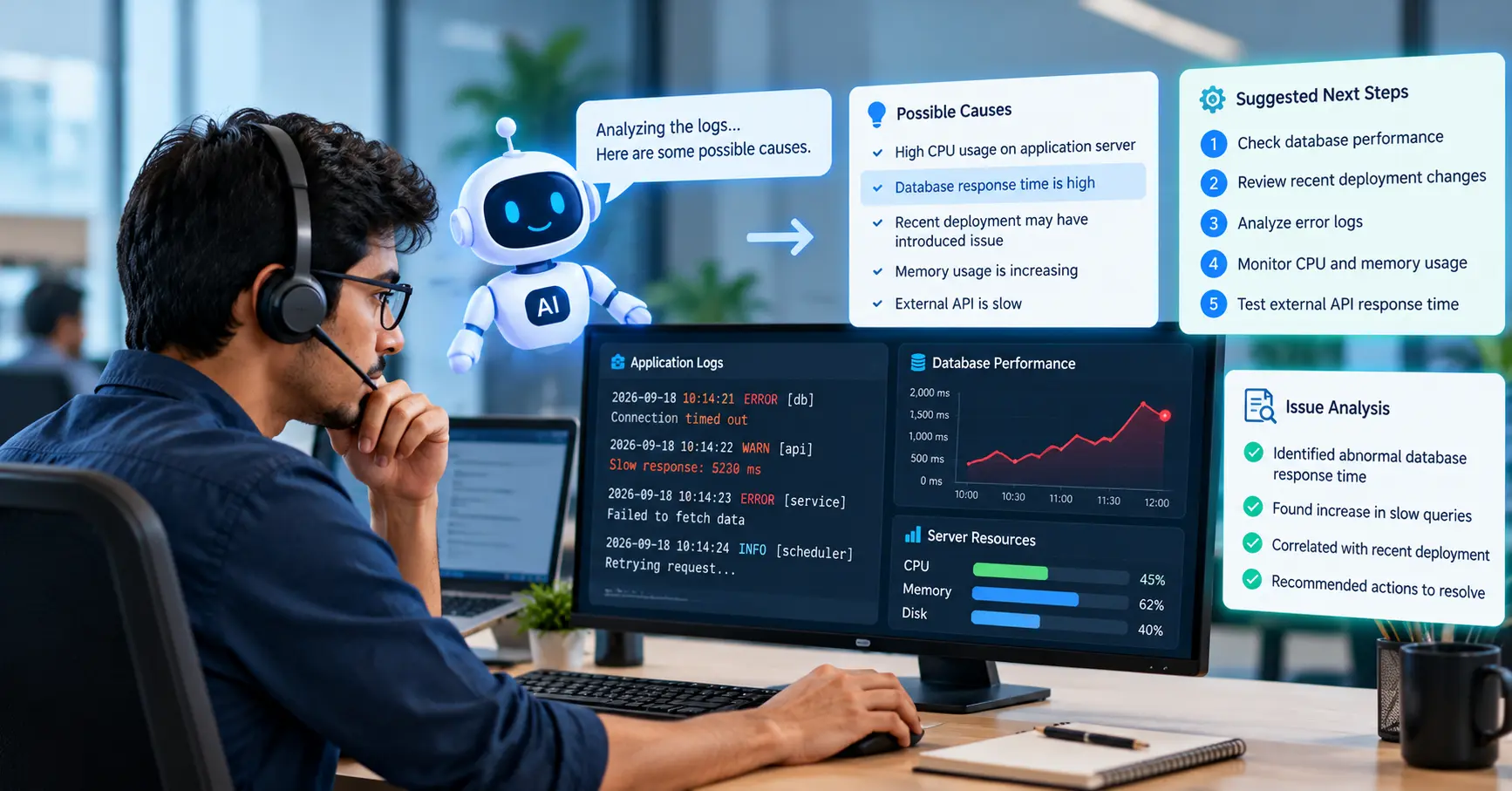
It can find information faster, summarize a long ticket history, suggest possible causes, draft responses and help support teams work through repetitive problems.
That does not make technical knowledge less important.
It makes the ability to use technical knowledge effectively even more important.
AI is changing the work, not simply removing the worker
AI is changing how work gets done. Tasks that once required significant time and manual effort can now be completed faster with AI tools. However, this does not mean that every job involving those tasks will disappear. Instead, the responsibilities within many roles are evolving, and professionals need to adapt to these changes.
For example: Technical Support Role.
An AI tool can help a support engineer find relevant documentation, identify common errors, or suggest possible solutions in seconds. But the engineer still needs to understand the customer’s problem, verify the suggested solution, investigate issues that are not straightforward, assess the technical impact, and communicate the next steps clearly.
When an issue cannot be resolved immediately, the engineer must use technical knowledge and critical thinking to investigate further or escalate it to the right team.
The role is shifting from simply finding answers to understanding problems, evaluating solutions, and making informed decisions. For students and fresh graduates, this means developing practical technical skills, problem-solving abilities, and the confidence to use AI as a tool rather than depend on it for every answer.
Also Read : Learn Effectively with AI
What AI can already help technical support teams do

AI is particularly useful when support work involves large amounts of information and repetitive tasks.
For example, AI can help support teams with:
Finding information
Support engineers often need to search documentation, previous tickets, knowledge bases and internal resources.
AI can make this process faster by helping find and summarize relevant information.
Microsoft’s research on AI and customer service highlights information retrieval as one area where AI can reduce the time agents spend searching for answers.
Understanding tickets
A complex customer issue may contain a long conversation, several previous troubleshooting attempts and multiple technical details.
AI can summarize the history and highlight important information.
The engineer can then spend more time investigating the actual problem.
Drafting customer responses
AI can help create an initial response based on the issue and available information.
The support engineer still needs to review the response.
A technically incorrect answer written quickly is still an incorrect answer.
Analysing technical information
AI can assist with interpreting logs, error messages and other technical information.
This can help an engineer identify possible causes more quickly.
But suggestions are not the same as diagnosis.
The engineer needs enough technical understanding to verify the result.
Automating repetitive work
Some support requests are predictable.
Password-related requests, common configuration questions and other repetitive processes can increasingly be handled through automation.
This allows human support professionals to spend more time on issues that require investigation and judgement.
Microsoft’s 2025 Work Trend Index also points toward a broader shift in which organisations combine humans and AI agents to handle work. Customer service is among the functions where organisations are investing in AI.
Technical fundamentals still matter
There is a temptation to think that AI means people no longer need to learn the basics.
That is the wrong lesson:
- If an AI tool tells you that a networking problem is caused by DNS, you need enough networking knowledge to investigate that claim.
- If AI suggests a Linux command, you need to understand what that command does before running it on a production system.
- If AI identifies a possible database problem, you need enough understanding of databases to test the hypothesis.
- AI can accelerate troubleshooting.
- It cannot remove the responsibility for the troubleshooting decision.
The better combination is:
Strong technical fundamentals + AI tools + good judgement.
The human side of technical support becomes more important
As AI handles more routine interactions, the human support professional is more likely to become involved when the problem is unusual, important or frustrating.
That makes communication more important, not less.
A customer does not care that an engineer knows ten AI tools.
They want someone who can understand the problem, explain what is happening and take ownership of getting it resolved.
The World Economic Forum’s research reflects this broader pattern. Alongside technology skills, employers continue to identify human capabilities such as analytical thinking, resilience, flexibility and collaboration as important skills for the changing workplace.
For a technical support professional, that means the skill set is becoming broader. You need to be able to think technically, work with AI and work with people.
Find Your Skill Gaps Before Your Next Interview
Don’t just read about job-ready skills. Find out where you stand.
Check your knowledge, answer practical questions and identify areas to improve with SkillVerify.
What this means for someone starting a technical support career
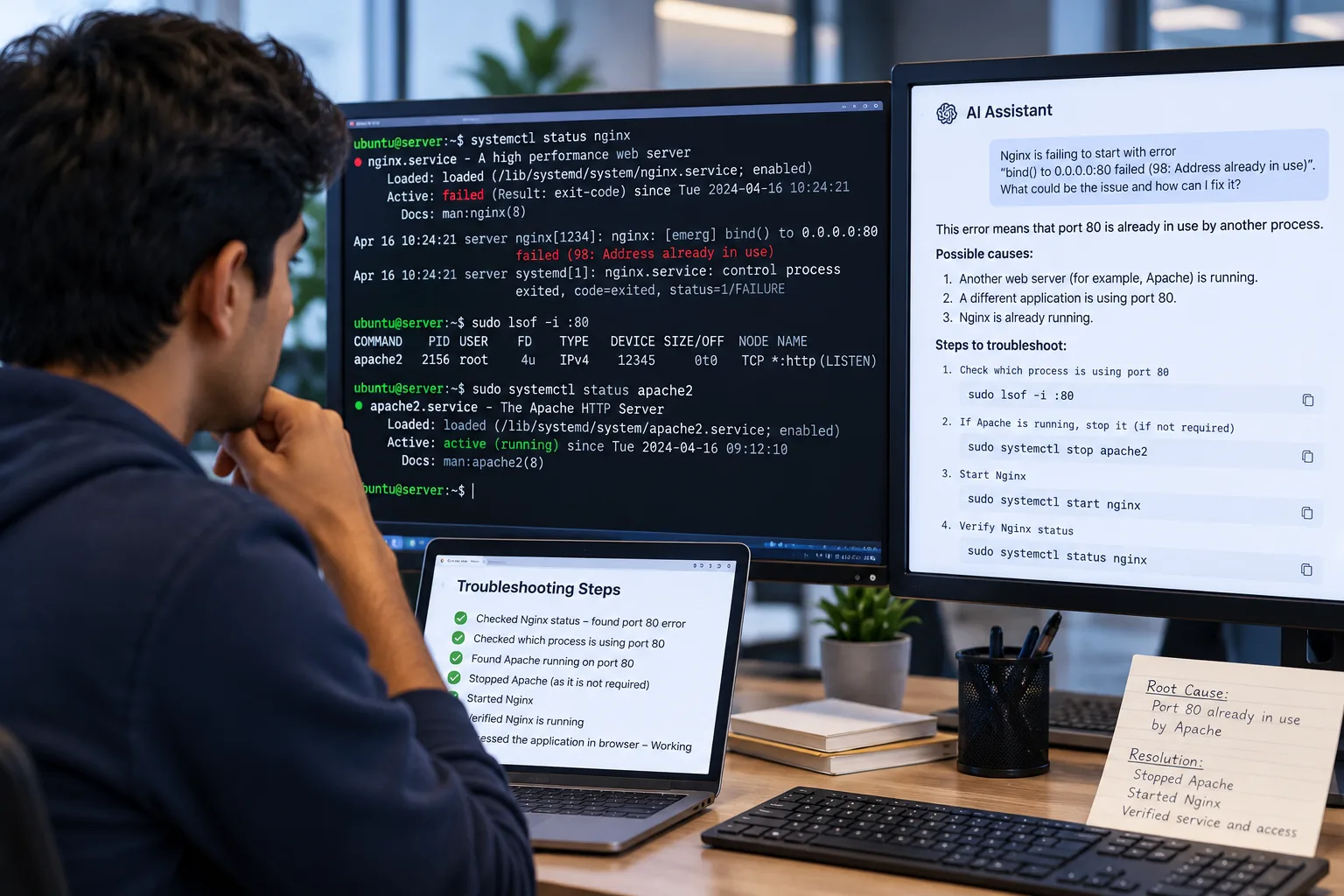
If you are preparing for your first technical support job, you should not try to compete with AI. You should learn to work with it.
A useful approach is to build your skills in layers. Start with strong technical foundations. Then practise troubleshooting real problems. Then introduce AI into the process.
For example, instead of asking AI:
“How do I fix this Linux problem?”
Try using it as a troubleshooting partner. Give it the error, the environment and what you have already tried.
Ask it to suggest possible causes. Then investigate those causes yourself. If the AI suggests a command, understand what the command does before using it.
This approach teaches two skills at the same time:
- Technical problem-solving and AI-assisted problem-solving.
- That combination is likely to become increasingly valuable.
For better understanding you also read :AI Skills for tech careers
AI may raise the standard for entry-level technical support
There is also an uncomfortable side to this change.
If AI can handle some of the simpler support tasks, entry-level professionals may have fewer opportunities to stand out simply by knowing how to follow basic procedures.
The bar can move higher.
Employers may increasingly look for candidates who can demonstrate that they can:
- troubleshoot unfamiliar problems
- understand technical fundamentals
- use modern tools
- communicate with customers
- learn quickly
- take ownership of an issue
This is part of a much larger shift in the labour market.
The World Economic Forum estimates that nearly 40% of workers’ existing skill sets are expected to change by 2030.
For young professionals, this means career preparation cannot stop at completing a degree or learning a list of technologies.
You need to demonstrate that you can apply what you know.
This is why practical skills and hands-on experience matter more than certificates alone. Read more about Certificates vs Skills: What Matters More in the AI Era? to understand why employers value demonstrated skills alongside formal qualifications.
How UPSPIR Approaches Job-Ready Technical Skills
At UPSPIR, we believe the question is not:
“How do we train people to compete with AI?”
The better question is:
“How do we prepare people to become better professionals because they know how to work with AI?”
That changes how technical training needs to be approached.
A future-ready technical support professional should not only know Linux commands, networking concepts or SQL syntax.
They should be able to take a real customer problem, investigate it, use the right tools, work with AI when it helps, verify the information, communicate the solution and document the outcome.
That is the direction we believe technical careers are moving toward.
Through the UPSPIR technical training programs, students can build foundational technical knowledge and develop practical skills that help prepare them for real-world IT roles.
It needs to become part of how professionals learn and work.
Conclusion
AI will continue to automate parts of technical support.That is already happening.But the important question for someone building a career is not:
“Will AI replace technical support?”
A better question is:
“What kind of technical support professional will be valuable in an AI-enabled workplace?”
The answer is becoming clearer.
- Someone with strong technical fundamentals.
- Someone who can investigate rather than simply follow instructions.
- Someone who can use AI without blindly trusting it.
- Someone who can communicate with customers.
- And someone who keeps learning as the technology changes.
- AI may automate some of the work.
But professionals who know how to combine technical knowledge,human judgement and AI can become much more capable. That is the opportunity.
And for someone starting a technical career today, learning how to work with AI is becoming part of being job-ready.