

Learning on the job / Learnability

How you learn while working makes a lot of difference in your journey towards building a great career in tech. Even if we assume you got the right education in your school or college but it will never be possible that you acquire all the skills during your education.

As you grow in your career you have to continuously become proficient in what you already know and also learn new skills. Further, tech jobs come in all different shapes and sizes, even the same role with the same KRA in two organizations will require a different skill set to succeed.

It becomes imperative once you start working to understand the needs of the role and start learning, not every skill and expertise will come in the form of an official training assignment, you have to learn the art of acquiring skills and knowledge from daily events and experiences.

Learning itself has multiple theories around it, once you are on job it will be a combination of listening, seeing, reviewing, practicing, and it starts with curiosity and a can-do attitude is a must. Your ability to form questions from daily problems and then seek answers, will be important, for example, you were unable to solve a problem but a colleague or senior was able to do it, so the first thing is curiosity and the attitude that what was the case that you were not able to close but there were? The second would be to actually know the solution and how they figured it out. The third would be to understand the solution using any reference material physical or online, and the last would be to actually apply it.

Another way learning happens is when you stay with the problem until it is solved, this may require additional efforts, especially when you are designing or developing something, work-life balance is important but these are crucial situations that can make all the difference in whether we were able to learn something in totality or not when we stay with the problem till the end and arrive at the solution, it really helps us to connect the dots, and fill in the gaps in our concepts, and yes it makes a huge difference to our confidence and helps to build the right attitude.

When you implement something (a solution, a process) and complete the feedback loop, you can also learn a lot, as compared to when you are only a part of the implementation. When you are able to see the impact, take the feedback, and then correct things as per feedback, you are able to see the cause and effect and this helps in building a deep understanding of the problem and solution which leads to real learning.

Your curiosity in learning something new will allow you to seek new skills which may not be a part of your KRA but complementary to it, learning these skills to some level helps to do your job better, and even open opportunities for you to progress further. For example, for a tech support engineer, learning programming concepts will help you understand what is happening around you better, you will be able to communicate with right artifacts and terminologies, helping you reach solutions faster, it does not only help in improving your concepts but also provide you visibility across the teams.

In a nutshell, learning on the job or your learnability skill will be a key differentiator on how you perform and grow in your career, like other skills it is also a skill that has to be developed as you go along in your career. This doesn’t only impact your initial career but this allows you to have a deeper understanding of the work you do, helping you build and long and lasting career in Tech Industry..

..

..

Author

Nikhil Ahluwalia
Founder Upspir
Nikhil has over 16years of experience in the industry, before starting UPSPIR he was heading the support, services, and delivery function at Exotel. and he has vast experience in managing and leading technical support and delivery teams, With Upspir he aims to take his passion of developing and mentoring people to next level by sharing his experiences and learning with those who want to build their career in the tech support domain.

How A Tech Support Job Opens Multiple Career Options

How A Tech Support Job Opens Multiple Career Options.

When we start our careers, many of us aspire to become programmers or move straight into specialized roles like DevOps or database administrators. These are high-demand jobs that offer good salaries, so it’s understandable why we would want to pursue them. However, if you’re unable to break into these fields right away, consider tech support as your launchpad into the IT industry.

A tech support job gives you hands-on exposure to various technologies, sharpens your problem-solving skills, and builds your customer service expertise, critical assets in any IT role. More importantly, tech support isn’t a limited role; it’s a stepping stone to specialized careers like DevOps, Cloud Engineering, and Cybersecurity.

So if you’re not sure where to start your tech career, don’t overlook tech support. It could be the smartest way to launch your journey in tech industry and build a thriving tech career.

What is a technical support engineer role?

A technical support engineer is a professional who provides technical support to customers and users of software, hardware, and other technology. Their primary tasks include troubleshooting technical problems, providing guidance, and ensuring smooth system operations.. Technical support engineers work in a variety of industries, including IT, telecom, healthcare, and finance.

From job opportunities point of view, nearly every medium and large company have its own IT or support department. These teams either either provide technical support to the organization or its employees or providing support to the clients on the product and services offered by the organization. This demand makes technical support a widely available and promising career path with diverse growth opportunities.

Responsibilities of a Technical Support Engineer

The responsibilities of a technical support engineer vary depending on the specific role and industry. However, some common responsibilities include:

  1. Troubleshooting and resolving technical issues
  2. Providing technical support to customers and users
  3. Documenting and tracking technical issues
  4. Keeping up-to-date on new technologies
  5. Developing and maintaining relationships with customers and users
The roles range from helpdesk to L3,  Organizations also have different roles with similar job specifications like tech support engineer, application support engineer, support engineer, system administrator, system engineer etc.

Skills and Qualifications for a Technical Support Engineer

The skills and qualifications required for a technical support engineer role vary depending on the specific role and industry. You can read more about 10 best entry level tech jobs and skills required to get hired. However, some common skills and qualifications include:

  1. Strong technical knowledge
  2. Excellent problem-solving skills
  3. Excellent communication skills
  4. Ability to work independently and as part of a team
  5. Ability to work under pressure

Tech support roles can range from helpdesk support to L3 (advanced technical support). Additionally, organizations may have different job titles for similar roles, such as:

    • Technical Support Engineer
    • Application Support Engineer
    • Support Engineer
    • System Administrator
    • System Engineer

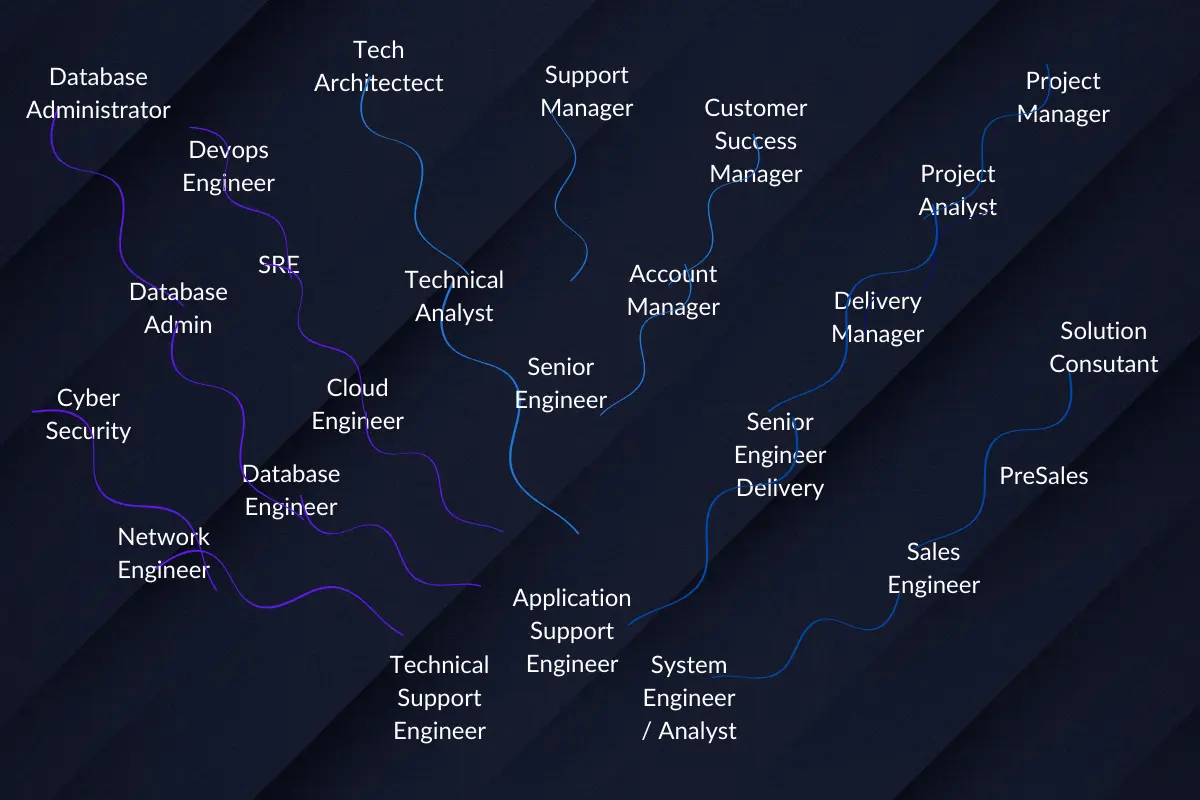
Technical Support Role opens Multiple Career Options

Upspir - Technical Support Role opens multiple career options

Working in a technical support role can provide you with the opportunity to learn about different technologies, processes, and practices. If you are focused and willing to put in the effort, you can become an expert in any of these areas and build a strong career.

For example, if you are providing support for a particular application, you will gain experience working on the daily issues that users face. You will also learn how to resolve these issues and coordinate with customers to understand their pain points. This experience can give you the opportunity to grow into a consultant or product manager role in the future.

Even if you don’t choose another career path,  you can expect to advance to the senior technical support level in 1-2 years. With continued experience, you can then grow to become a technical lead, manager, or other senior-level position.

If you are technically inclined, you can grow into roles such as tech lead, solutions engineer, QA engineer, or software developer. You can also build your career in DevOps or SRE roles. If you enjoy interacting with people and coordinating with customers, you can grow into roles such as customer success manager, account manager, or solution consultant. The possibilities are truly limitless.

How to Get Started in a Career in Technical Support

There are a few things you can do to get started in a career in technical support:

  1. Get a degree in computer science or a related field
  2. Get certified in a technical field
  3. Gain experience working in a technical support role
  4. Network with people in the tech industry

If you’re interested in a career in technical support, I encourage you to learn more about the field and explore your options. It could be the perfect way to launch your journey into the world of technology.

About Upspir

Bridging the Gap: Skilling Professionals, Solving Resourcing

At Upspir we are on a mission to help young professionals build a successful career in tech support domain,  Our programs train candidates on both technical and non-technical skills to prepare them for the jobs and interviews. 

We have partnered with leading companies in India's thriving tech market, and we can help you get hired in one of these companies.

In case you are interested in exploring our programs please feel free to fill the inquiry form here. 

We will be happy to hear from you and address your queries.

Tech support role - Challenges

Yes, initially starting in a tech support role is challenging and so is learning and growing in these career paths. The role itself can be challenging and will need a lot of patience and belief to sustain in these roles. Learning on the job will be the key, and you will have to put additional effort in building your skills while at work to get the chances to progress further.

While you select your strength area, you will again have to put additional effort into enhancing your skills and knowledge and putting your strengths to work. Apart from the effort, you will also need a to have a career plan and a process (within the organization or outside) in place for you, to follow the career plan, and a support mechanism that pushes you to follow the same.

..

…

Author
Nikhil Kumar Ahluwalia
Founder Upspir

Nikhil has over 16years of experience in the industry, before starting UPSPIR he was heading the support, services, and delivery function at Ameyo/Exotel as vice-president, and he has vast experience in managing and leading technical support and delivery teams, With Upspir he aims to take his passion of developing and mentoring people to next level by sharing his experiences and learning with those who want to build their career in the tech support domain.

Building a strong career journey starting in tech support

Having worked in this industry for 16 years, I’ve seen firsthand how individuals who started in tech support have successfully transitioned into project managers, technical managers, and even product managers. A career is not just about how you start—it’s about how you build upon that start.

Career growth isn’t solely about mastering technical skills. As you move into senior roles, soft skills, managerial abilities, and strategic thinking become just as important. This will need introspection, identifying the knowledge and skills that you will need, and then acquiring it. Finally, things like discipline, consistency, and taking responsibility for your work, are also crucial, When your seniors can depend on you, they’ll be more likely to trust you with greater opportunities and career growth.